


Selling Your Home in Spring 2027? Here's What You Should Be Doing Now
Your North Atlanta Guide to Preparing, Pricing, and Planning Your Next Move Without Last-Minute Stress
If you're planning to sell your home in spring 2027, you may be wondering:
When should I actually start preparing? Three months before listing? Six months? Or should I wait until I'm ready to put the house on the market?
And is it too early to contact a Realtor if you're not planning to sell until March, April, or May?
Here's what I recommend.
Some of the most important decisions about selling your home should happen months before it ever goes on the market.
That doesn't mean you need to start renovating tomorrow or spend the entire winter living in a staged house.
It means understanding your home's current market position, identifying which improvements are worth making, estimating your potential proceeds, and planning your next move before you're facing a deadline.
Whether you're selling in Alpharetta, Milton, Roswell, Johns Creek, Cumming, or another North Atlanta community, starting early can give you more flexibility and help you avoid unnecessary expenses.
Here are seven questions I recommend answering before your spring listing.
1. Is It Too Early to Contact a Realtor If I'm Selling Next Spring?
Not at all.
In fact, if you're thinking about selling within the next three to six months, I recommend starting the conversation now.
And that doesn't mean you need to sign a listing agreement or commit to an exact date.
An early consultation should be about understanding your options and building a plan.
When I meet with homeowners several months before their intended sale, I want to understand more than just the property.
Why are you moving? Where are you planning to go?
Are you purchasing another home?
Do you have a deadline, or is your timeline flexible?
Then we look at the house through a buyer's eyes.
What are its strongest features?
How does it compare with nearby properties?
What improvements might be worthwhile?
Are there potential maintenance concerns we should investigate?
Sometimes homeowners are pleasantly surprised to learn that their property needs far less preparation than they expected.
Other times, we identify projects that may require contractors, scheduling, or a larger budget.
The advantage of starting early is having the time to make informed decisions without rushing.
You're not committing to selling immediately. You're preparing to make the most of your options when the time comes.
2. What Should I Be Doing Three to Six Months Before Selling?
I would focus on three priorities.
Understand Your Home's Current Market Position
Before spending money on improvements, it's important to understand what buyers are actually paying for comparable homes.
For example, a property in Alpharetta with a renovated kitchen and finished basement may compete differently from another home in the same neighborhood that hasn't been updated.
Similarly, a $600,000 home in Cumming may have different buyer expectations from a $1.2 million property in Milton.
I review recent comparable sales, current listings, homes under contract, price reductions, and properties that have struggled to sell.
The goal isn't to establish your final spring asking price today.
It's to understand how your home compares with the competition so we can make better preparation decisions.
Identify Potential Obstacles Early
Walk through your home and consider what might make buyers hesitate.
Are there maintenance concerns you've been putting off? Flooring that needs attention? Rooms that feel crowded? A garage or basement that needs organizing?
Are there improvements that will require a contractor or specialized evaluation?
Identifying these items early gives you time to obtain estimates, review your options, and decide what is actually necessary.
Establish a Realistic Budget and Timeline
How much are you comfortable spending on preparation?
Which projects are essential, and which are optional?
Will you need help moving furniture, decluttering, painting, or preparing outdoor spaces?
And how will those expenses affect your expected proceeds?
Before you start spending money, develop a plan that connects each expense to a potential seller benefit.
That may mean improving the home's presentation, reducing buyer concerns, supporting its competitive position, or making the transaction easier to manage.
3. Which Home Improvements Are Worth Making Before Spring?
This is one of the most common questions homeowners ask.
Should you repaint the entire house? Replace the carpet? Refinish the hardwood floors? Update the bathrooms?
My answer is that
not every improvement is worth making right before selling.
| Category | Examples | How I Would Approach It |
|---|---|---|
| Fix | Active leaks, broken fixtures, obvious damage, maintenance problems | Address issues that affect function, safety, or buyer confidence. |
| Review | Worn flooring, stained carpet, older systems, outdated bathrooms | Compare costs, condition, buyer expectations, and competing homes. |
| Usually skip | Unnecessary luxury upgrades, highly personal finishes, major renovations without a clear return | Avoid spending money without a market-supported reason. |
For example, refinishing visibly worn hardwood floors may significantly improve how a home presents.
But renovating an entire kitchen just because it isn't your favorite style may not produce enough additional value to justify the expense.
Sometimes the solution is a smaller repair.
Sometimes it's professional cleaning, updated lighting, or furniture editing.
And sometimes the right strategy is to acknowledge a home's condition and account for it in pricing.
Your goal is not to make your home perfect. It's to make it competitive without wasting money.
Starting several months early gives you time to compare options instead of making expensive decisions just before listing.
For a more detailed breakdown, see my related guide: “30 Days Before Listing: What I Would Fix, Skip, and Review.”
4. Can We Estimate What My Home Will Sell for in Spring 2027?
Yes. We can develop a preliminary market-value range today.
And that information can be very helpful, especially if you're planning another purchase.
An early comparative market analysis can help you estimate your available equity, determine a preparation budget, and evaluate whether your planned move is financially realistic.
But there's an important distinction.
Your home's estimated market value today is not a guarantee of what it will sell for next spring.
Between October and March, several things may change.
- Mortgage rates may rise or fall.
- New listings may enter your neighborhood.
- Buyer demand may shift.
- Comparable homes may sell, reduce their prices, or offer concessions.
Even within the same city, different price ranges and property types can experience different market conditions.
That's why I use an early market analysis for planning and financial decisions.
Then, before launching the listing, I update the analysis using the most recent sales, pending contracts, active competition, and buyer activity.
I also reassess the home's condition and how it compares with the properties buyers can choose from at that time.
Plan your finances early, but price your home for the market you're actually entering.
That approach is more reliable than committing to a particular asking price months in advance and hoping the market supports it.
5. Should I Get a Home Inspection Before Listing?
A pre-listing inspection can be useful, but it isn't necessary for every seller.
For an older home or a property with known maintenance concerns, an inspection may identify issues before a buyer discovers them during due diligence.
That can give you time to obtain estimates, decide whether to repair certain items, and gather documentation.
However, inspections also involve expenses, and discovering additional issues may create disclosure obligations.
So, I prefer evaluating this decision based on the property's condition, age, known concerns, and the seller's circumstances.
In some situations, a targeted evaluation may make more sense.
For example, if you have questions about an older roof, you may benefit from a roofing contractor's assessment.
If there have been HVAC concerns, having the system evaluated and serviced may provide helpful information.
If you suspect moisture or drainage issues, investigate those concerns early rather than assuming they will disappear before listing.
The goal is not to guarantee that a future buyer's inspection will find nothing wrong.
The goal is to understand potential problems, address appropriate concerns, and reduce avoidable surprises during negotiations.
And remember, repairs and disclosure obligations are separate considerations. Known material issues should be handled accurately under applicable Georgia requirements.
6. What If I'm Selling My Current Home and Buying Another One?
For many North Atlanta homeowners, this is actually the most complicated part of the process.
Preparing the property is one thing.
Coordinating the sale of your current home with the purchase of your next one is another.
And it's a conversation I strongly recommend having early.
There are several approaches.
Sell Your Current Home First
Selling first allows you to know how much equity you'll have available for your next purchase.
It can also simplify financing because you may not need to qualify while carrying two properties.
But the timing requires careful planning.
Will you be able to find your next home before closing? Will you need temporary housing? Could you negotiate a closing date or post-closing occupancy arrangement that provides additional flexibility?
Buy Your Next Home First
Purchasing first may give you more time to move, prepare your existing home, and avoid having to coordinate two closings on the same day.
But this strategy requires understanding your financing and whether you can comfortably carry both properties if the current home takes longer to sell than expected.
Depending on your circumstances, bridge financing, home-equity financing, or other lending options may be worth discussing with a qualified lender.
These options involve costs, qualification requirements, and financial risks that need to be evaluated carefully.
Make Your Purchase Contingent on Selling
In some situations, you may be able to negotiate a purchase that is contingent upon selling your current home.
However, the seller of the property you're purchasing must be willing to accept that contingency, and the terms need to be structured carefully.
This approach can provide flexibility, but it may also affect how competitive your offer is.
Don't Forget Your Current Mortgage Rate
If you're moving from a home with a particularly low mortgage rate into a new property financed at today's rates, your monthly payment may change significantly.
That deserves attention before deciding how to structure your move.
On the other hand, if you're downsizing or purchasing with substantial equity, the financial picture may look very different.
The best selling strategy should support your entire transition, not just maximize the sale price of your current home.
That's why coordinating the sale and the next purchase should begin months before listing whenever possible.
7. Should I List My Home in March, April, or May?
I wouldn't automatically choose one month today.
And I certainly wouldn't promise that a particular month will result in the highest selling price.
Spring traditionally brings more buyer activity, but it also brings more competing listings.
If your home is ready in early March and there are few comparable properties available, that may create a favorable opportunity.
But if your home needs several more weeks of preparation, rushing onto the market simply to hit a March date could work against you.
Similarly, if outdoor living spaces, gardens, or landscaping are among your home's strongest selling features, the presentation may influence your preferred launch window.
What's happening with other listings matters, too.
Are comparable homes selling quickly?
Are price reductions becoming more common?
Are buyers negotiating concessions?
How many new properties have entered your price range?
Those questions need to be answered closer to your actual listing date.
Rather than committing to an exact date months in advance, I prefer establishing a target listing window and adjusting the strategy based on market conditions and home readiness.
Your Spring 2027 Home-Selling Preparation Timeline
If you're planning to list in March, April, or May, here's how I would organize the months ahead.
| When | Main Priority | What to Accomplish |
|---|---|---|
| October–November 2026 | Evaluate and plan | Market review, home walkthrough, repair priorities, estimates, preliminary selling range, next-move strategy |
| December 2026–January 2027 | Complete priority work | Repairs, justified painting or flooring work, decluttering, packing, gathering property records |
| January–February 2027 | Prepare for presentation | Deep cleaning, staging plan, lighting, landscaping, photography and marketing coordination |
| Two to three weeks before launch | Reassess and finalize | Updated comparable sales, current competition, buyer activity, final pricing and launch strategy |
October–November: Make the Important Decisions
Start with an initial consultation and market review.
Identify what needs attention, estimate potential costs, and determine which improvements are worth making.
This is also the time to discuss your moving plans and financing considerations if you're purchasing another property.
The objective isn't to start every project immediately.
It's to stop guessing and build a clear plan.

December–January: Complete Priority Preparation
This is a good time to schedule repairs and improvements that require contractors.
Begin organizing storage areas, closets, and the garage.
Pack away belongings you won't need before moving.
Gather records of major home improvements, service histories, warranties, permits when applicable, and HOA information.
You don't need to have every room staged in December.
But you should have a plan for what stays, what goes, and what may need to be added before photography.
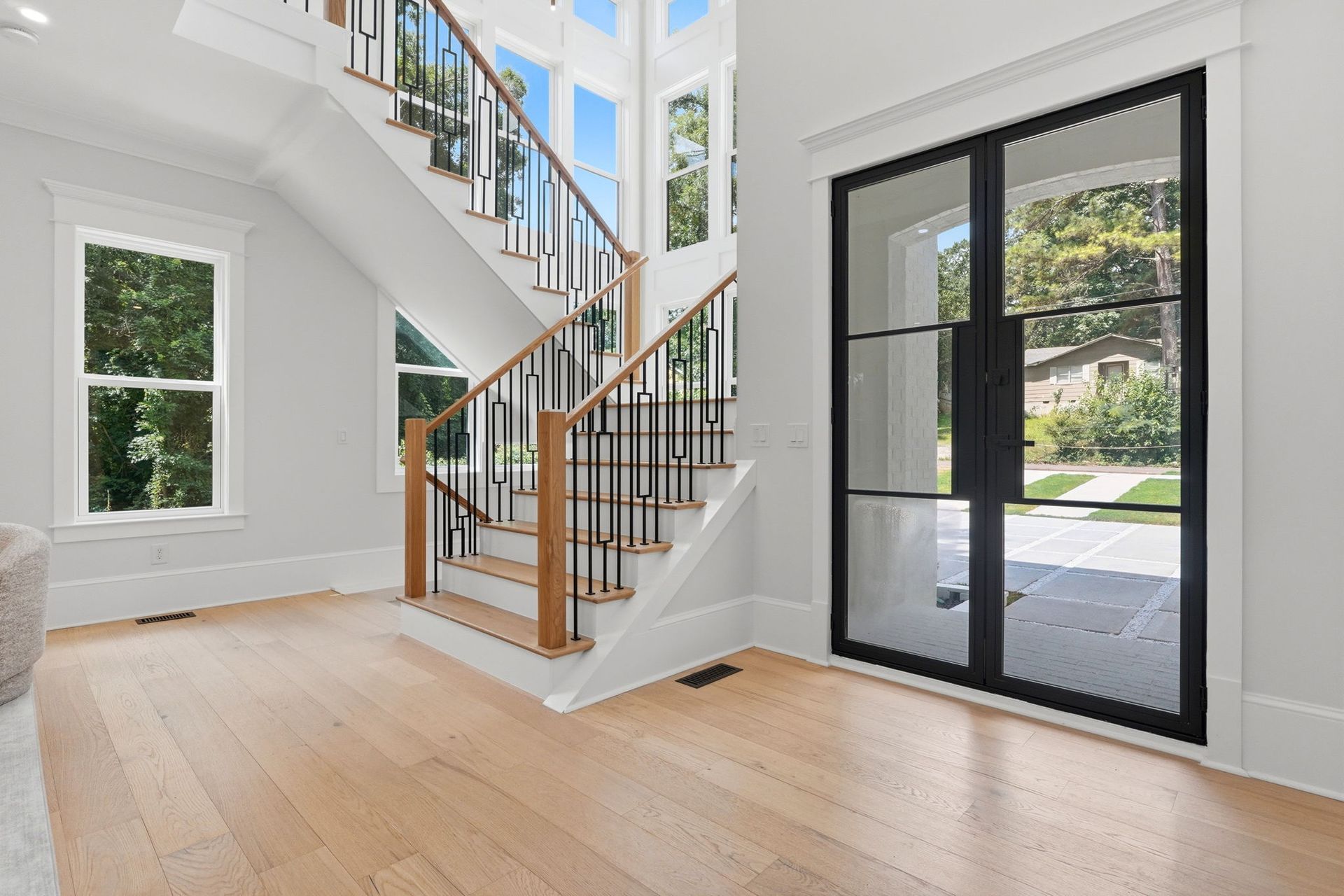
January–February: Get Ready for Presentation
As the target listing window approaches, focus on finishing the work.
Deep cleaning, lighting, windows, furniture placement, and professional staging when appropriate.
Plan for exterior presentation as well.
In North Atlanta, mature landscaping and outdoor spaces can be major selling features, so timing appropriate landscaping work deserves attention.
Coordinate professional photography, property information, and the marketing plan.
And if you're buying another home, make sure your purchase and financing strategy are aligned with your expected selling timeline.

Two to Three Weeks Before Listing: Review the Market Again
This is one of the most important steps.
Even if we completed a detailed market analysis months earlier, we need to look again.
- What has sold recently?
- Which properties are under contract?
- What competing listings are available?
- Have sellers reduced their prices or offered incentives?
- What does buyer activity look like in your specific price range?
These details help determine your final pricing and positioning.
Prepare early, but make your final pricing decision using the market you're actually entering.
Don't Forget the Documents You'll Need
Preparing your home also means gathering information buyers may request.
When available, I recommend organizing records for major renovations, the roof, HVAC systems, water heater, applicable permits, warranties, surveys, termite coverage, and recent repairs.
If your home is in an HOA community, obtain current information about dues, initiation and transfer fees, special assessments, and relevant association documents.
This can help you prepare accurate disclosures, answer buyer questions, and identify potential issues before a transaction is underway.
For condominiums and certain attached townhomes, association insurance and financial information may also be needed for the buyer's lender. Starting those conversations early may help avoid unnecessary delays.
Frequently Asked Questions About Selling in Spring 2027
Final Thoughts: You Don't Have to Be Ready to List to Start Preparing to Sell
If you're thinking about selling in spring 2027, you don't need to begin renovating tomorrow.
You don't need to live in a staged home for six months.
And you don't need to commit to a specific asking price right now.
But you can start making the decisions that will shape your eventual sale.
Understand your current market position.
Decide which improvements are actually worthwhile.
Establish a preparation budget.
Plan the financial and logistical side of your next move.
And give yourself enough time to prepare without unnecessary pressure.
A strong spring listing doesn't begin the day your home goes on the market. It begins with the decisions you make beforehand.
Planning to Sell in Spring 2027?
If you're considering selling your home in Alpharetta, Milton, Roswell, Johns Creek, Cumming, Suwanee, or the surrounding North Atlanta area, I'd be happy to help you start planning.
My Spring Listing Preparation Review is designed to help you understand your home's preliminary market position, preparation priorities, potential expenses, and the timing of your next move.
You don't need to be ready to list. You just need a starting point.
Text
PREP to
404-436-2128 to begin.

Irina Averyanov
Keys to North Atlanta | Keller Williams North Atlanta
404.434.4454
irina.a@kw.com
www.keystonorthatlanta.com